Destinations
- Home
- Destinations
- East Peloponesse


East Peloponnese
Nafplio, Leonidio/Plaka, Kiparissi, Yerakas, Monemvasia
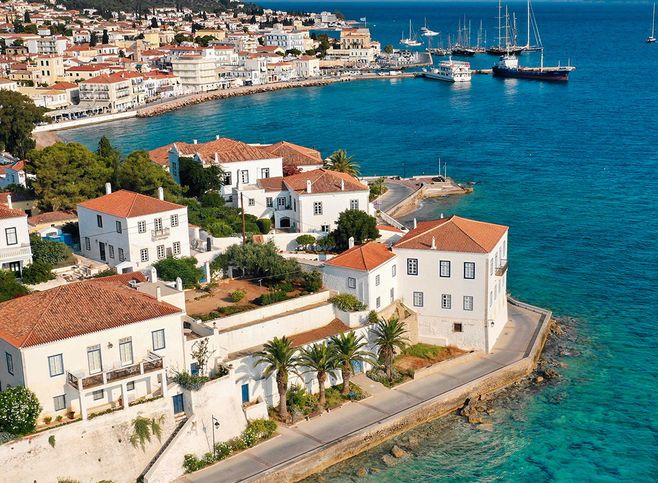
Heading south from Athens, we’ll encounter destinations such as Spetses, Nafplio, Astros, Tyro and Leonidio/Plaka, Kiparissi, the fjord of Yerakas ‐ picturesque fishing villages with views of the Myrtos Sea. A little further south you’ll face the legendary Monemvasia rock.
The eastern Peloponnese coast south west of Poros is a spectacular mountainous wall stretching south-south east from Astros to the towering Cape Malea. It is rugged, wild and sparsely inhabited, with only seven small harbours in sixty miles of coast. Down here, in the provinces of Arcadia and Lakonia you see the same untouched scenery as Odysseus.
The Sailing Area
The sailing area of the eastern Peloponnese described here extends from the southern end of the Argolic Gulf down to the south western tip of the Peloponnese at Cape Malea and on around to the island of Elafonisos and south to the island of Kithera. Our two-week sailing proposal South-Eastern Peloponnese sails much of this region as well as the Argolic Gulf area, so if you are considering this experience it is worth reading the details for both areas.
The Winds & Sailing
The South eastern Peloponnese sailing area includes the Laconic gulf and extends down the eastern shore of the Peloponnese to Cape Malea in the far south, and Argolic Gulf to the north. The northern part of the sailing area is therefore the Argolic Gulf which is well protected from the summer ‘Meltemi’ wind that blows from the north/north easterly. As we are heading south towards Monemvasia, we gradually leave the shelter of the Argolic Gulf and enter the more exposed south eastern Peloponnese. That said, by heading north again you can tuck back into the shelter of the Argolic Gulf, Hydra and Spetses.
Ports & Places of Interest
The eastern Peloponnese coast is a place of quiet unspoilt villages and anchorages. You will find waterside tavernas but you will be well away from large towns and the noise of all-night bars and discos. If you look for peace and natural beauty, this is the area for you.
Tiros
This has become a new stop since the mole has been extended providing good shelter. It is worth the visit for the friendly restaurants and the charming village on the hill.
Nafplio
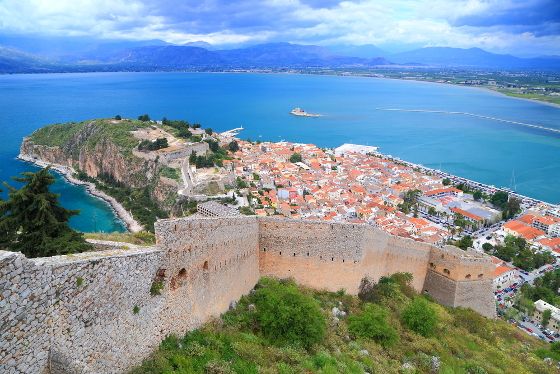
Nafplio, the capital of the prefecture of Argolida and the first capital of Greece, is a picturesque city with a significant history and deeply rooted cultural traditions. Built at the foot of two forts, Palamidi and Acronafplia, today it has a population of around 19,000 inhabitants and a growing tourism. Nafplio is a neoclassical 19th century city with great tradition and centuries of history.
A Glimpse of the Past
According to mythology, the city was built by Nafplius, son of Poseidon and protector of the city Nafplio. During the Mycenaean period, the city flourished into one of the strongest naval powers of Greece. It had access to maritime communications, but most importantly, the steep rocky slope of Akronafplia protected it from any intruders.
At the beginning of the 7th century BC the city of Nafplio was a founding member of the State Union of Kalavria and shortly thereafter, it was referred to as a mighty seaport of Argos. The city was the management center of the rebel forces during the Greek Independence War in 1821. On May 4th 1827, the third National Assembly defines Nafplio as the official capital of the country.

Plaka (Leonídhion)
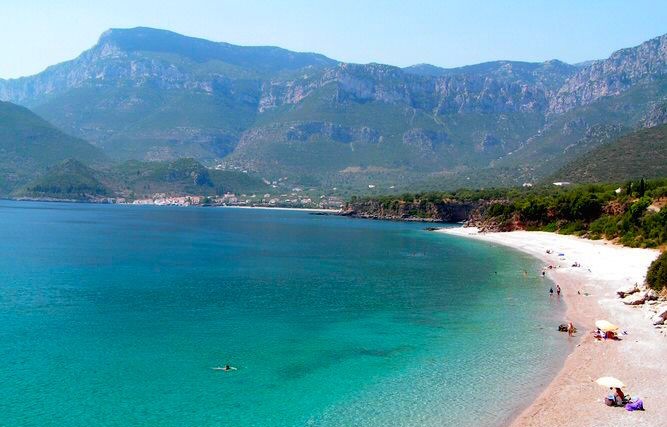
This is a must; Plaka harbour is situated under impressive rocky slopes and boasts a mile long beach with tavernas selling dishes sourced from the local market gardens. It is the port for Leonidhion which is situated four kilometres inland on the floor of the valley and is the capital of the region. Leonidhion is an untouched Arcadian stone town and worth a visit to see the beautiful traditional stone houses and the spectacular landscape that surrounds it. Nearby is the spectacular convent of Mount Elonis.
Kiparissi
Kiparissi is situated in a spectacular bay surrounded by steep mountains that provide good sheltered mooring from all but north easterly winds. There are three quays; town quay, chapel cove and the north west quay, each appropriate for sheltering from a different wind direction. The village has several tavernas and basic provisions can be found. Between Kipirissi and Yerakas there are some wonderful anchorages providing the weather is calm.
Yerakas
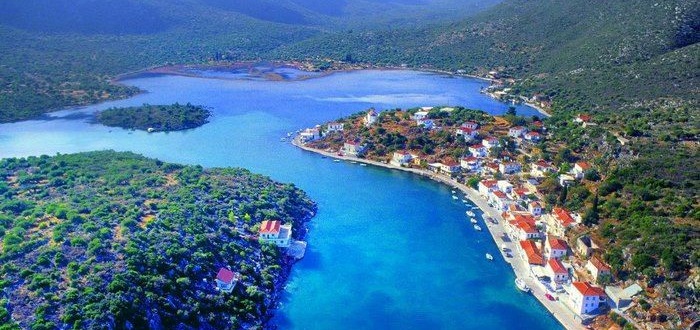
Yerakas is something really different; a totally protected fjord opening out into a (very) shallow inland salt water lagoon. It is an enchanting little place with a couple of excellent tavernas along the water’s edge. There is a small shop under one of the tavernas. On the northern point of the entrance are the ruins of an acropolis dating from Mycenaean times which sit above Kastro (Castle Point).

Monemvasia
‘The Gibraltar of the East’ and a must-see destination for any sailor. We anchor at one of the marinas and head up to the medieval fortress. Within its walls, we’ll find one of the best-preserved castles in Greece, which attracts visitors from around the world all year long. The view from our yacht is particularly impressive, with the majestic grey rock and its castle towering above you. With plenty of places to eat and drink, we recommend staying overnight at least. The colossal rock has the remains of a Byzantine town spread across the top and a medieval village tucked onto its southern side. To enter the village is to take a step back in time. A causeway joins it to the mainland town of Yefira where the harbor is situated.
Sources: discovergreece.com/peloponnese/monemvasia, discovergreece.com/peloponnese